Quicksort (Basic Algorithm)

Quicksort is an efficient sorting algorithm based on the divide-and-conquer paradigm. It works as follows: Example of Quicksort: Let’s consider sorting the following array [5, 2, 8, 1, 9, 4, 7]. Python Code Example Quicksort Characteristics: Pivot Selection Strategies: The choice of pivot significantly impacts Quicksort’s performance. Quicksort is widely used due to its relatively simple implementation and speed.… Read More »

Bubble Sort (Basic algorithm)

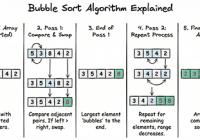
Bubble sort is one of the simplest sorting algorithms. It works by repeatedly stepping through the list, comparing adjacent elements and swapping them if they are in the wrong order. Larger elements “bubble” to the end of the list with each pass. This process continues until the entire list is sorted in ascending (or descending) order. Example: Let’s… Read More »

k-Means Clustering (basic algorithms -machine learning )

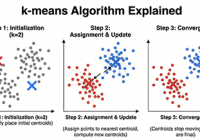
k-means clustering is an unsupervised learning algorithm used to partition a given dataset into several groups (clusters). It works by iteratively updating the “centroids” – the center points of each cluster – and assigning data points to the closest centroid. Features: Steps of k-Means Clustering Let’s consider the following 2D dataset as an example: We want to cluster… Read More »

Basic Mathematics and Python (Level-2)

“Learn machine learning in Python while understanding the underlying mathematics and algorithms.”  Scheduled for release at the end of April Chapter 1: Basic Mathematics and Python CodeMatrices/SequencesVectorsCombinatorics and ProbabilityComplex Numbers and Complex EquationsTrigonometric FunctionsExponential and Logarithmic FunctionsEquations and CurvesLimitsDifferential CalculusIntegral Calculus Chapter 2: Linear AlgebraAlgorithm 1Algorithm 2Algorithm 3 ・・・ Chapter 3: Machine Learning・・・・

Monte Carlo Method -random numbers (basic algorithm)

The Monte Carlo method is a technique that uses random numbers to solve complex problems. For example, consider the following types of problems: These problems can be difficult to solve analytically. The Monte Carlo method involves performing experiments using a large number of randomly generated numbers and making statistical estimations based on the results. Origin of the name: It’s named… Read More »

Hash Table Search(basic algorithm)

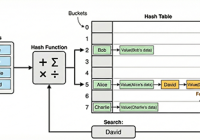
Hash table search is an algorithm for efficiently searching data. Instead of looking sequentially like in a regular array, it uses a “hash function” to convert the data into an “index” where the data is stored, enabling fast access. Imagine: Let’s consider finding a book in a library. How Hash Table Search Works Code Explanation Advantages & Disadvantages… Read More »

Binary Search (A simple algorithm)

Binary search is a very efficient method for finding a specific value within a sorted list of data. Think of it like looking up a word in a dictionary. Specific Steps: Advantages: Disadvantages: In Summary: Binary search is a powerful algorithm for efficiently finding a specific value within sorted data. Understanding the dictionary analogy can help you grasp how… Read More »

Period (T) and Frequency (f) – A Simple Explanation

Period (T) Frequency (f) Relationship Period and Frequency are inversely proportional to each other. They are related by the following formulas: f=1T T=1f Feature Period (T) Frequency (f) Meaning Time for one cycle Cycles per second Unit Seconds (s) Hertz (Hz) Relationship T = 1/f f = 1/T Analogy: “By the way, ocean waves travel through water, and… Read More »